News and resources
The Youngest Voices: How Journalists in West Nile Are Beginning to Prioritise Early Childhood in Crisis Reporting
For years, Uganda’s media has dedicated significant attention to examination results, politics, and national development issues. Yet one critical subject has often remained underreported: the experiences and development of children during their earliest years of life.
This is the gap that a recent Early Childhood Development (ECD) journalism training in West Nile set out to close.
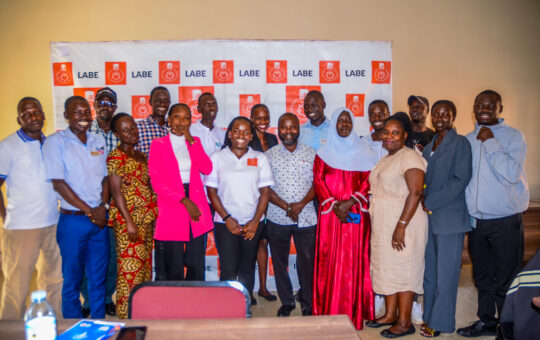
Organised by LABE Uganda in partnership with the REACH Network, a global community of journalists committed to advancing ECD reporting, and supported by the Moving Minds Alliance (MMA), the training brought together journalists from across the West Nile region to deepen their understanding of early childhood development and equip them to report more effectively on the issues affecting children from birth to eight years. For MMA, whose work centres on ensuring that the youngest children in humanitarian and crisis settings are seen, heard, and protected, building journalist capacity to tell ECD stories is not peripheral, it is strategic.
The training was motivated by a growing recognition that journalists play a vital role in shaping public understanding of child development and in influencing action among parents, communities, policymakers, and service providers.
A Region That Cannot Afford to Stay Silent
West Nile, home to both host and refugee communities, presents unique challenges for children and caregivers. Many young children face barriers to quality early learning opportunities, adequate nutrition, healthcare, and psychosocial support. Despite these realities, stories focusing on the needs of young children rarely make headlines.
Participants explored topics including child development, nutrition, health, play-based learning, child protection, ethical reporting, and the importance of giving visibility to children’s issues in both humanitarian and development settings.
According to participants, the training helped reveal just how consequential journalism can be in changing this narrative.
“The Brain Window Closes Very Fast”
Vasco Gift, a journalist with Radio Pacis in Koboko District, said journalists have an important responsibility to help communities understand why investments in early childhood matter.
“When you look at children from zero to eight years, we are talking about health, nutrition, play, safety and learning. Yet Uganda’s media mainly focuses on Primary Leaving Examination results and not why children are struggling by the time they reach Primary One,” he said.
Gift noted that scientific evidence shows approximately 90 percent of brain development occurs before the age of five, making early childhood a critical period that deserves far greater public attention.
“The brain window closes very fast, but the media can help open people’s eyes. Most parents think real learning starts in Primary One, yet the foundation is laid much earlier,” he explained.
He believes journalists can play an important watchdog role by monitoring the implementation of ECD policies and investments.
“Money is allocated to support early childhood development, but sometimes it is not effectively utilised. Trained journalists can ask district leaders and education officials the hard questions and ensure accountability,” Gift added.
Beyond accountability, participants discussed how media can challenge misconceptions that continue to harm children’s development. In many communities, caregiving is viewed solely as a mother’s responsibility, while play is dismissed as a waste of time. Research has consistently shown that responsive caregiving, father involvement, and play-based learning contribute significantly to children’s cognitive and emotional development.
Reporting with Dignity: The Ethics of Telling Children’s Stories
A significant portion of the training was dedicated to ethical reporting practices, an area that sits at the heart of MMA’s approach to ECD communications. Participants examined not only what to report, but how to do so in ways that protect children’s dignity, safety, and agency.
For journalists working in refugee-hosting communities, this is not a theoretical concern. Children in West Nile’s humanitarian settings often carry complex stories of displacement, loss, and interrupted childhood. The risk of re-traumatisation, identity exposure, or portraying vulnerable children as subjects of pity rather than individuals with rights is real.
Gift said responsible journalism means moving beyond images of suffering and instead telling stories that respect children while highlighting both challenges and solutions.
“We need to protect children’s identities, seek proper consent and tell stories that promote dignity. We should also focus on community solutions and positive examples that can inspire change,” he said.
Participants also explored how to centre children’s own perspectives in their reporting — moving away from stories told entirely through adult voices, and toward coverage that reflects what children themselves experience and need.
Seeing Children as a Category with Rights
For Lenia Winnie, a journalist based in Arua City, the training came at a particularly important time.
Arua is one of Uganda’s major refugee-hosting districts, and many of the stories she encounters involve children who have experienced displacement, trauma, poverty and disruption to their education.
“I feel this training came at the right time because I work in a refugee-hosting area where many children are living through difficult circumstances,” Winnie said.
“As journalists, we often discuss communities as a whole without understanding that children have unique needs and experiences that deserve special attention.”
The training broadened her understanding of how to report more effectively on issues affecting young children, and equipped her with tools to do so without causing harm.
“Thanks to REACH Network and LABE Uganda, I now understand how to prioritise children’s issues and how to ensure they are seen as a category of people with their own rights and needs,” she explained.
Winnie has already identified stories she plans to pursue, including a piece on the barriers refugee families face in accessing early learning centres in Arua, and a profile of a community-based caregiver who has supported dozens of young children through informal play-based sessions.
“If more journalists receive this kind of training, we will have more voices speaking up for children and ensuring their concerns are not overlooked,” she added.
One Story Can Educate an Entire Community
Florence Aikoru of Spirit FM Koboko said the training reminded journalists that the future of communities depends heavily on how children are supported during their formative years.
“Most of the time, we leave children out of important discussions and focus only on adults. Yet the foundation of a child’s growth lies in the support they receive during their early years,” Aikoru said.
She believes journalists can contribute significantly by reporting on ECD centres and initiatives, bringing these spaces into public view and making the case for their value.
“One story about an ECD centre can educate thousands of parents. If you do ten stories, you educate an entire community,” she said.
Aikoru observed that many parents still believe that taking a child to an early learning centre is unnecessary or a waste of money. Through informed reporting, journalists can help families understand the benefits of early learning and encourage greater investment in their children’s development.
“When parents understand the value of ECD, they begin to appreciate its importance. This can help children grow mentally, emotionally and socially, which benefits the entire community,” she explained.
She also emphasised that journalism can expose gaps in service delivery and push leaders to act.
“When we tell these stories, we also reveal areas where leaders need to do more. That helps improve services and creates accountability,” she said.
Building a Movement: The REACH Network Uganda Chapter
The training concluded with participants expressing a strong commitment to producing more stories focused on children and early childhood development. But perhaps the most significant outcome was the beginning of discussions around establishing a dedicated REACH Network Uganda Chapter.
The chapter would bring together journalists across the country who are interested in advancing ECD reporting, creating a peer community for sharing story leads, reviewing coverage with an ECD lens, supporting one another on ethical dilemmas, and building a sustained media presence around children’s issues in both development and humanitarian contexts.
For the REACH Network, which MMA supports as a global platform for ECD-informed journalism, the Uganda Chapter would represent a meaningful expansion of local capacity in one of East Africa’s most complex humanitarian environments.
The ambition is clear: not just to train individual journalists, but to build an ecosystem where ECD reporting becomes a recognised and valued specialism in Uganda’s media landscape.
Journalism as an Act of Advocacy
For many participants, the training was more than a professional development opportunity. It was a reminder that journalism can influence how societies value and invest in their youngest citizens.
As these journalists return to their newsrooms across West Nile, they carry with them a new mission: ensuring that children’s stories are not only told, but heard, understood and acted upon.
In a region where thousands of children face challenges linked to poverty, displacement and limited access to essential services, that mission matters. Because when journalists speak up for children, communities listen, and sometimes, things change.
Written by Teddy Dokotho, edited by Lola Ayanda